
How To Know How Often To Take Lessons
Let us help you decide the best lesson frequency for your child's needs.
FOR PARENTS
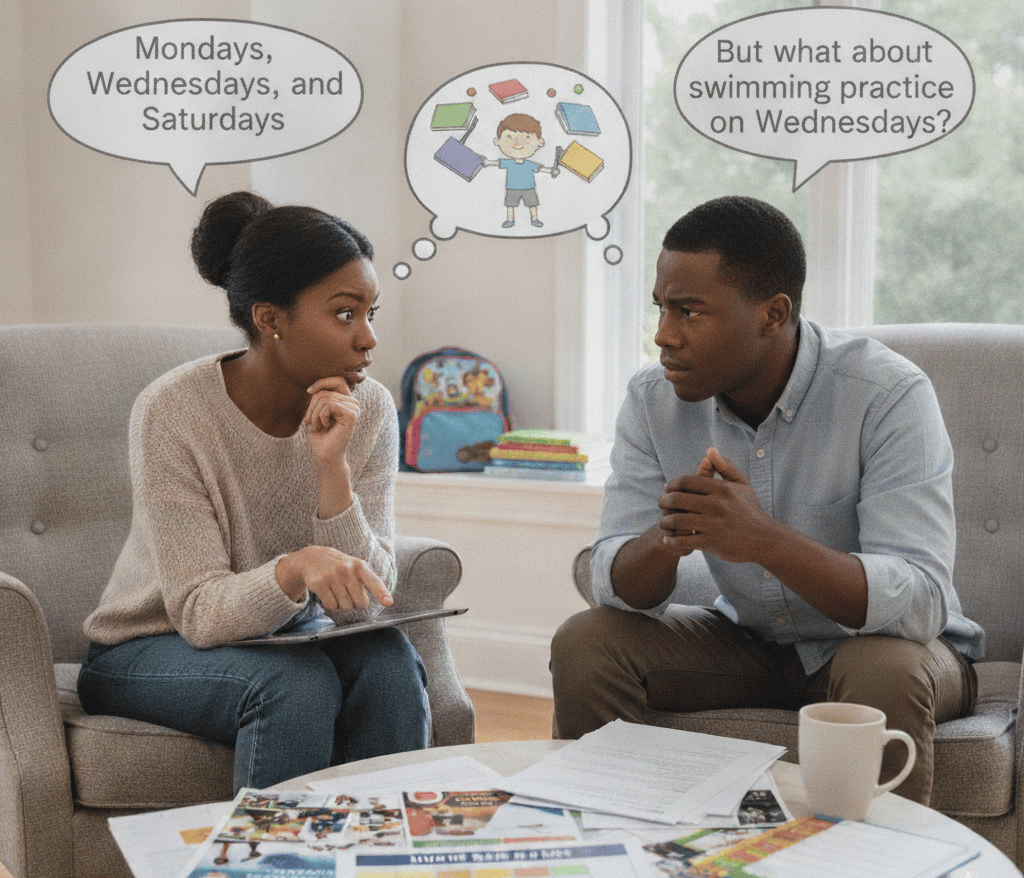
Before committing to a consistent learning schedule for their child, many parents wonder, "How many lessons should my child have each week?"
The answer to that depends on your child's current ability and the goal you are trying to achieve. More lessons are not always better. The right number of lessons provides enough consistency for steady progress while still allowing your child enough time to rest, practise independently, and enjoy learning.
Let's consider some useful thoughts that should help you decide:
If Your Child Is Already Doing Well
If your child is performing well in a subject and simply needs continued support, one lesson per week is usually enough.
If your child is receiving support in both Mathematics and English, one lesson per subject each week (two lessons in total) is generally ideal.
This approach keeps skills sharp, fills learning gaps before they become problems, and provides ongoing guidance without placing unnecessary pressure on your child.
If Your Child Is Struggling
Children who have significant learning gaps benefit from more frequent support.
For a child struggling in a single subject, two to three lessons per week usually provides the right balance between intensive support and healthy pacing.
If your child needs help in both Mathematics and English, three lessons per week is often the most effective schedule. We usually recommend placing two lessons on the subject that needs the most attention and one lesson on the second subject.
This allows meaningful progress where it is needed most while continuing to strengthen the other subject.
Preparing for Important Exams
Exam preparation is different from regular learning.
If major examinations are approximately three months away, four lessons per week is usually appropriate. This provides enough intensity to revise large amounts of content, practise exam techniques, and build confidence before the examination.
Four lessons each week is demanding and may eventually lead to fatigue if maintained indefinitely. However, over a period of about three months, most students can sustain this pace successfully because it is focused on a specific short-term goal.
If the examination is more than three months away, there is usually no need to begin at this intensity. Instead, we recommend:
Start with three lessons per week.
Increase to four lessons per week once the examination is about three months away.
This approach helps students build strong understanding first before entering the final intensive revision period.
Think Marathon, Not Sprint
A useful way to think about lesson frequency is to compare it with running. A marathon is steady, sustainable, and designed for long-term success; a sprint is intense, demanding, and designed to achieve maximum performance over a short period.
Both are valuable — they simply serve different purposes.
Long-term learning support for struggling learners should be approached like a marathon: consistent, sustainable, and focused on lasting improvement, whereas short-term exam preparation should be approached like a sprint: higher intensity for a limited period to help students perform at their best when it matters most.
Choosing the right pace is just as important as choosing the right destination.
Our Recommendation
As a general guide, here's what we recommend:
Strong student (one subject): 1 lesson per week.
Strong student (Math and English): 2 lessons per week (1 per subject).
Student needing extra support (one subject): 2–3 lessons per week.
Student needing extra support (Math and English): 3 lessons per week, with 2 lessons devoted to the higher-priority subject.
Exam preparation (within 3 months): 4 lessons per week.
Exam preparation (more than 3 months away): Begin with 3 lessons per week and increase to 4 lessons per week when the examination is approximately 3 months away.
Every child learns differently. The ideal schedule is one that provides enough consistency for meaningful progress while remaining sustainable over time.
The goal is not simply to have more lessons. It is to have the right number of lessons for your child's needs.
Stay in touch . . .
Emmanuel Learning Services is an online tutoring business that provides high-quality, affordable one-on-one tutoring services specifically designed to support struggling learners and students performing below or significantly below their expected grade level.
We serve Nigerian parents at home and abroad, bringing into your home the discipline and genius that transforms struggling learners into star students.
Legally registered business in Nigeria:
RC No. 9038120
© 2026 Emmanuel Learning Services. All rights reserved.
Privacy policy.
Terms of Service.